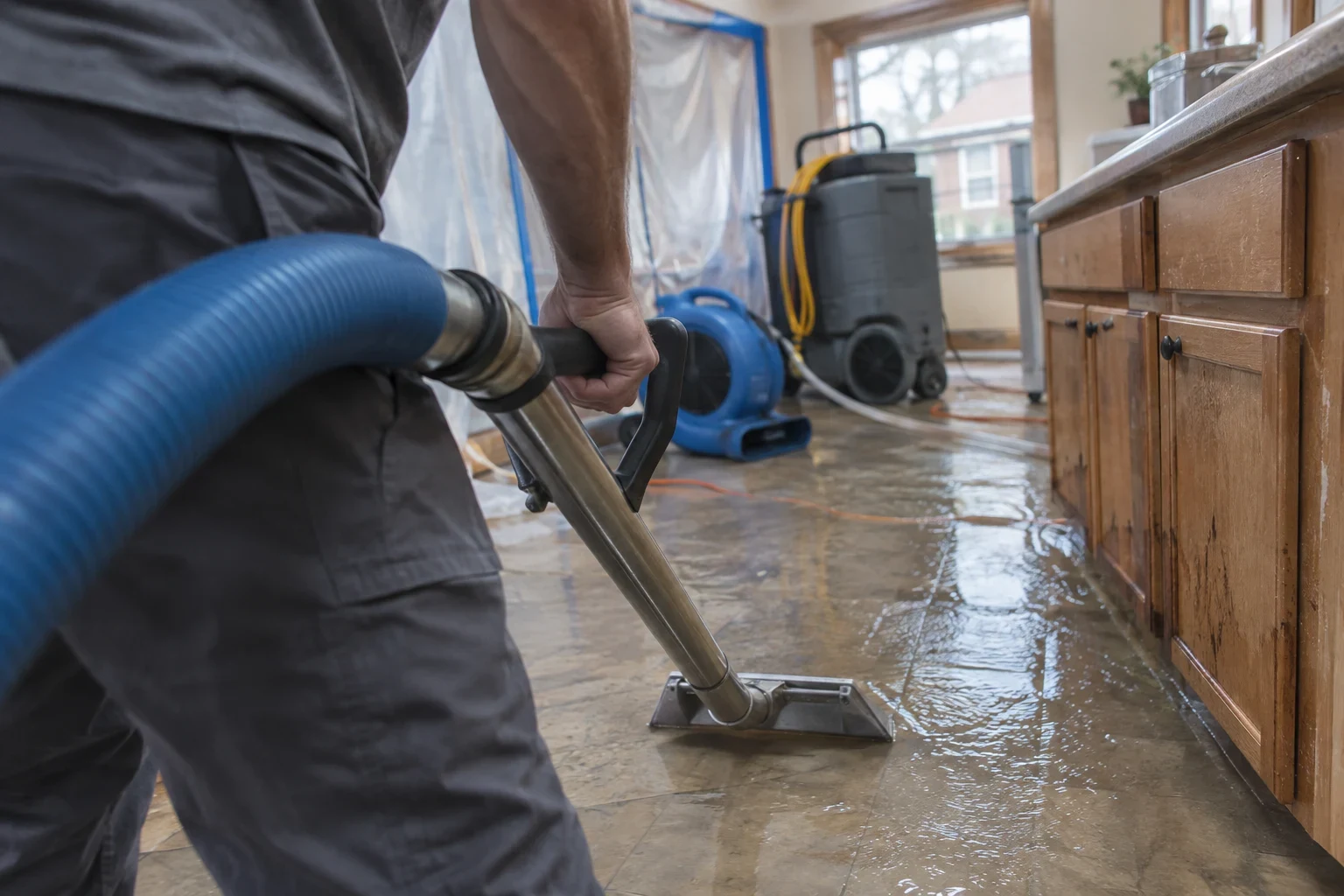
Water Damage Restoration in Ettrick, VA
A burst supply line, a failed water heater or a backed-up drain can soak drywall, subfloor and insulation within hours. We handle water extraction, drying, mold remediation, sewage cleanup and rebuild work in Ettrick, Petersburg and Colonial Heights, and we record every reading and photo so your claim has what it needs.
- Free on-site inspection
- Photos and moisture logs
- Emergency water response
- Line-item written estimates
Where We Work
We serve homeowners in Ettrick and nearby communities, including Petersburg, Colonial Heights, Fort Lee, Chester, Hopewell, Enon, Meadowbrook, Bellwood, Bensley and Brandermill. Our vans carry extractors, air movers and dehumidifiers, so the first visit usually includes the start of the work, not just a look around.
- Ettrick
- Petersburg
- Colonial Heights
- Fort Lee
- Chester
- Hopewell
- Enon
- Meadowbrook
- Bellwood
- Bensley
- Brandermill
If you are not sure whether your address is covered, ask when you call and we will tell you right away.
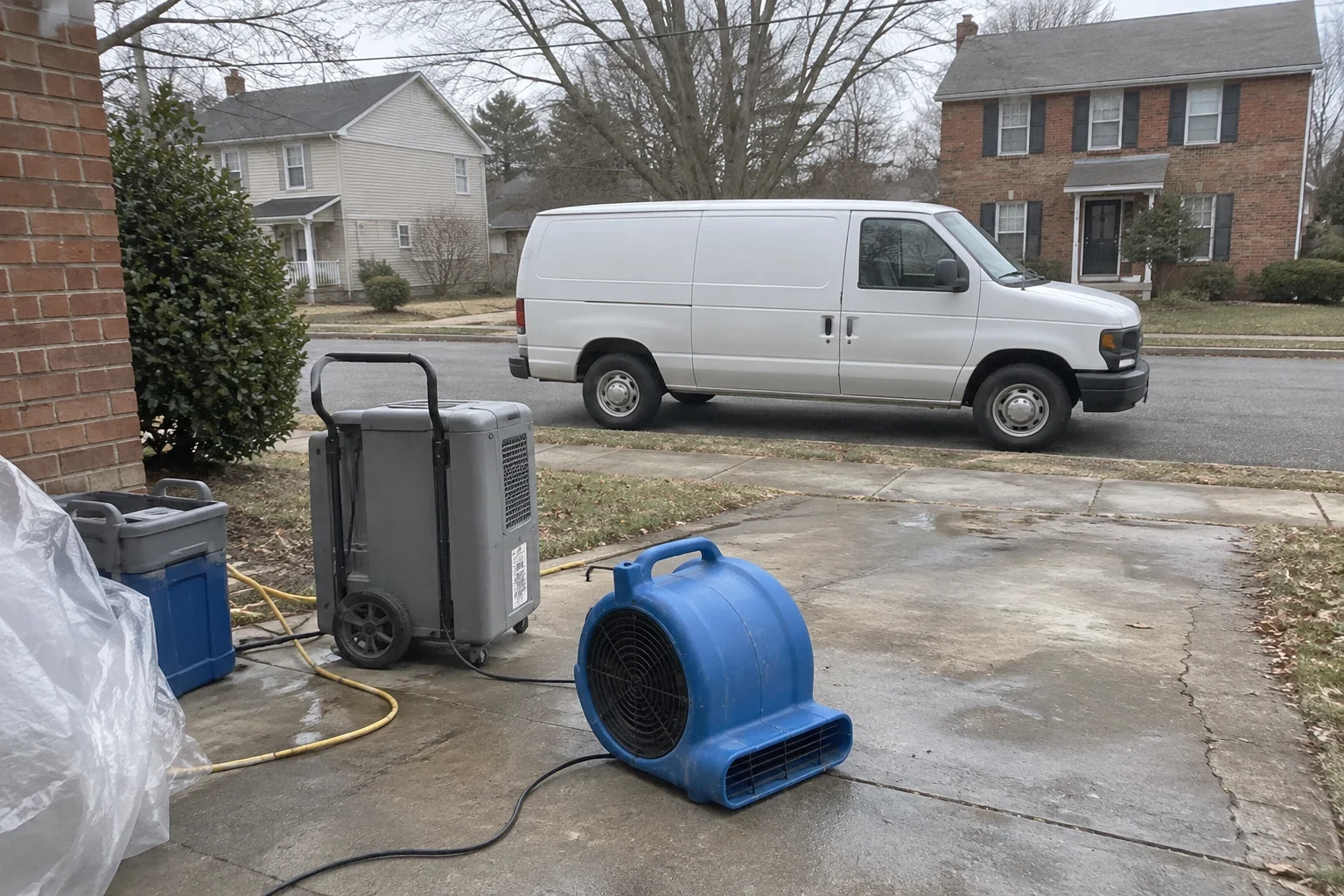
Water Damage Services for Your Home
We are IICRC certified, and we handle water extraction, drying and dehumidifying, mold remediation, flood cleanup, sewage cleanup, and repairs and rebuild. Every job starts with moisture mapping, because water runs along joists and wicks up drywall, so the wet area is almost always larger than the stain you can see. Knowing the true edge of the damage decides what gets dried in place and what has to come out.
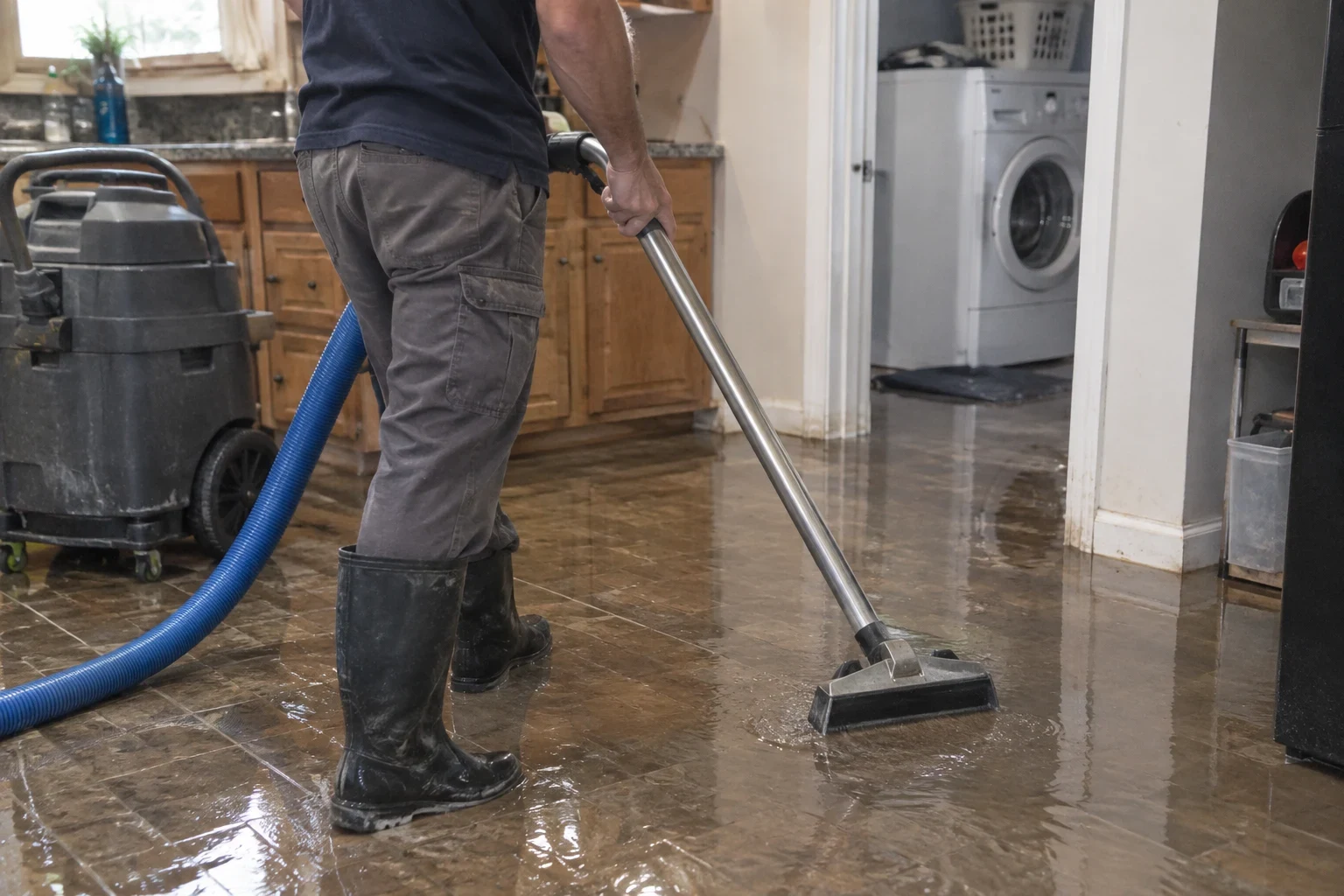
Water Extraction
We pump and extract standing and trapped water from floors, carpet and crawlspaces, then record moisture readings and photos you can share with your insurer.
Drying and Dehumidifying
Dehumidifiers, air movers and daily meter readings that dry walls, subfloors and framing to a measured standard, not a guess.
Mold Remediation
We trace the moisture feeding the mold, seal off the area, remove what can't be cleaned and record each step for your claim.
Flood Cleanup
Removal of floodwater, mud and soaked building materials, followed by sanitizing and a photo record your insurance adjuster can follow.
Repairs and Rebuild
We replace the drywall, insulation, subfloor, trim and flooring that water ruined, after confirming the structure is dry.
Sewage Cleanup
Contaminated water removed, affected materials cut out and disinfected, and every step photographed so your insurance claim has a clear record.
How a Water Damage Job Runs
Each step has a reason, and you will know what we are doing in your home and why before we do it.
- 1
Stop the source and protect the house
We help shut off water at the main or fixture valve and cut power to wet circuits if needed. Furniture gets blocked up off wet carpet so stains do not transfer.
- 2
Inspect and document
We map moisture with meters and thermal imaging, photograph every room and note the category of water. That record is yours to hand to your adjuster.
- 3
Extract and open up
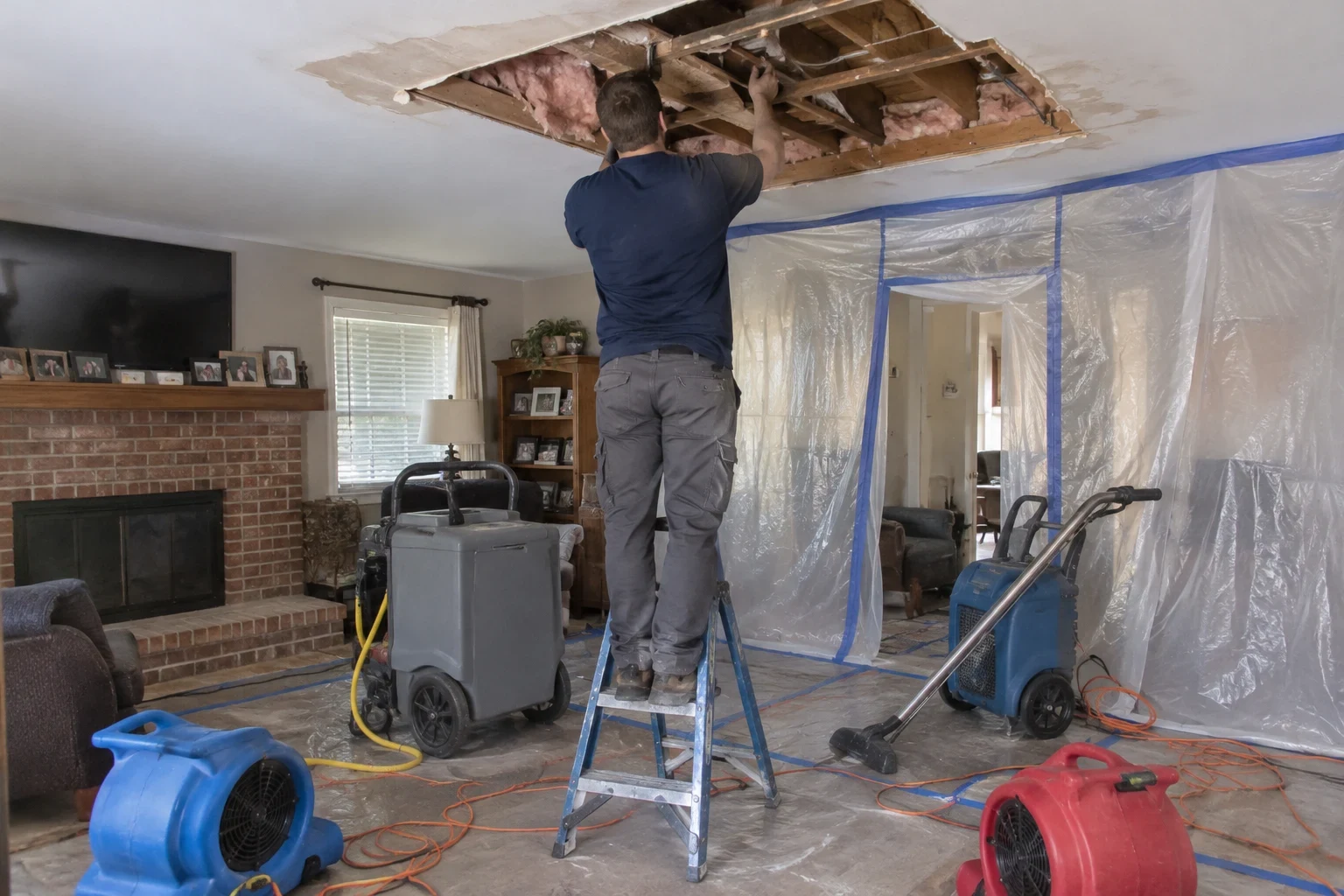
We pull standing water out of carpet and pad with extraction units sized to the volume, portable for a single room and larger rigs for a flooded level. If drywall has soaked water upward, we cut it a few inches above the wet line and remove baseboard so the wall cavity can breathe.
- 4
Dry and verify
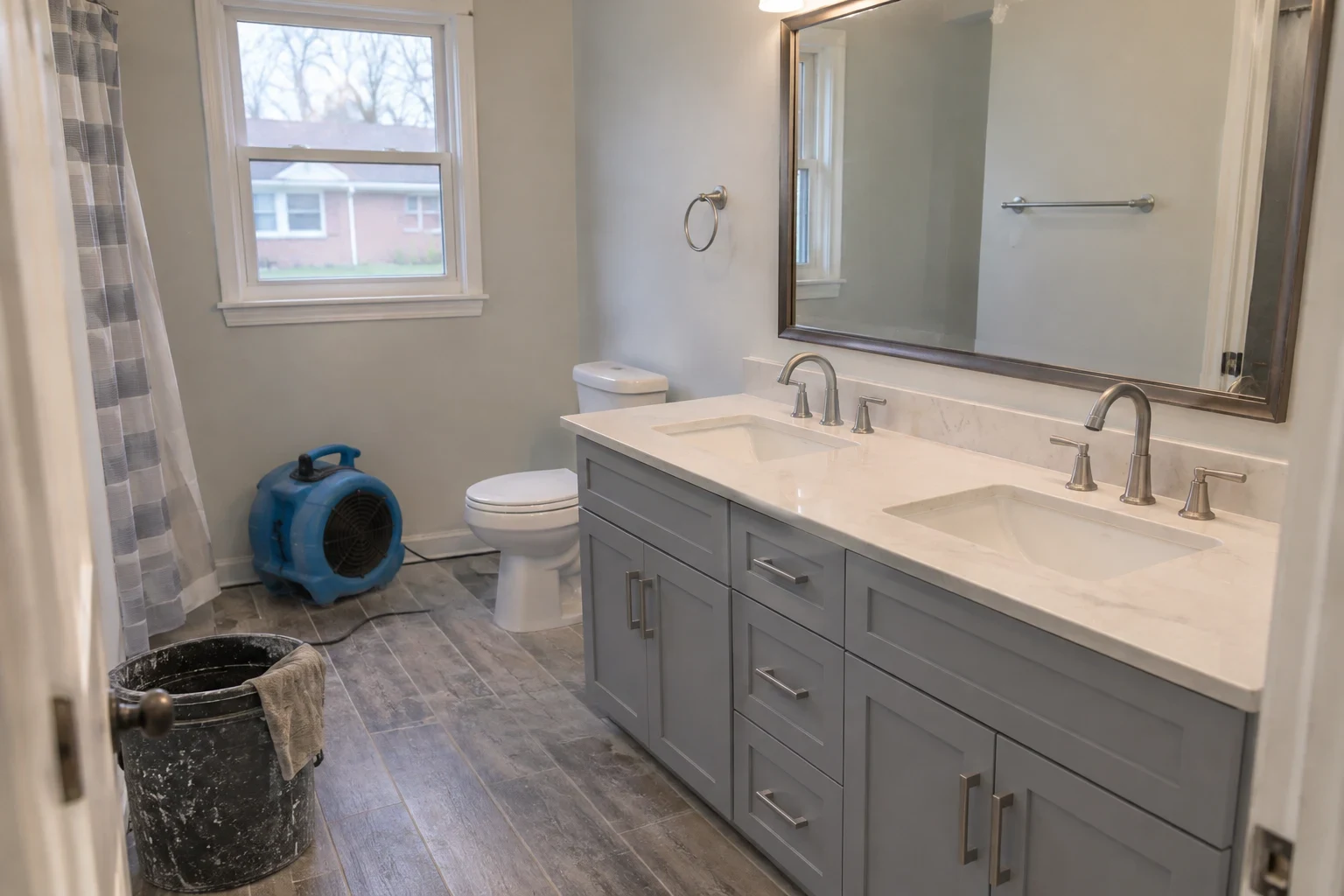
Air movers and low-grain dehumidifiers run while we take readings each day. Equipment stays until wood, drywall and subfloor reach dry standard, and each reading is logged.
- 5
Repair and rebuild
Once materials test dry, we replace drywall, insulation, trim and flooring so the room is back in use.
About Ettrick Water Damage Restoration
We are a water damage restoration company working inside homes across Ettrick and the surrounding area. Our job is to find where water went, get it out and dry the structure properly so problems like delamination, cupped floors and hidden mold do not show up months later.
We also know a water loss arrives with paperwork. Many homeowners have never dealt with an insurer after a loss and are not sure what the adjuster needs to see. We document as we go, explain the process in plain terms and leave coverage decisions to your insurer, where they belong.
- Certifications
- IICRC certified
What Moves the Cost of a Water Damage Job
No two losses cost the same, and anyone quoting a number by phone is guessing. The price comes from what got wet, what kind of water it was and how long drying takes. Here is what we look at during the free inspection.
The inspection is free, and any work comes with a written line-item estimate before we start. If you are filing a claim, we can walk you through how our estimate lines up with your adjuster's scope.
- Where the water came from
- Water from a broken supply line starts out clean, but a dishwasher overflow carries soap and food residue, and a sewer backup carries bacteria. The dirtier the source, the more porous material such as carpet pad and drywall has to be removed rather than dried.
- How far the water spread
- Water that stays on a tile floor is a small job. Water that wicked up walls, ran under cabinets or dripped into the ceiling below takes more equipment and more removal.
- Materials involved
- Hardwood can cup and may need floor drying mats. Plaster, insulation and particleboard cabinet bases behave differently from drywall and often need different decisions.
- Drying time and humidity
- Most structures dry in three to five days, but dense materials and humid Virginia summers can stretch that. More days on site means more equipment time.
- Access to the wet areas
- Crawl spaces, finished basements and wet areas behind built-ins take more labor to reach and dry.
- Mold and rebuild
- If growth has started, remediation adds containment and cleaning steps. Replacing drywall, trim and flooring is priced separately once drying is confirmed.
Why Homeowners Call Us First
Most of our work is drying and rebuilding. A large part of it is also helping you understand your claim without promising what your policy will pay.
- 01
Records built for your claim
We photograph each affected room before we move anything, log moisture readings by location and list damaged contents. You get copies to share with your adjuster, so the file rests on measurements instead of memory.
- 02
Drying measured, not guessed
Our crew is IICRC certified, and we dry by the numbers. We check wall cavities with pin and pinless meters, track humidity in grains per pound and pull equipment only when materials reach dry standard.
- 03
Straight talk about coverage
We explain how sudden and accidental water losses are usually handled and where long-term leaks often fall outside a policy. We are not your adjuster and will not guess at your payout. We work with most major insurance companies.
- 04
On site in 60 mins or less
Standing water keeps soaking into pad, subfloor and drywall the longer it sits. When you call, we send a crew that is on site in 60 mins or less.
- 05
Estimates you can read
Repair estimates are written line by line: square feet of drywall, linear feet of baseboard, flooring type. That makes it easy to compare against the scope your insurer writes.
Water Damage Questions We Hear Most
Will my homeowners insurance cover this?
Coverage depends on your policy and on what caused the water. A pipe that bursts or a supply line that fails without warning tends to fall under a standard homeowners policy. Water that seeped for months, or that rose from outside, is frequently excluded, and outside flooding usually requires a separate flood policy. We can explain how these lines are usually drawn, but only your insurer can confirm what you have.
Should I call my insurance company or you first?
You can do both the same day. Stopping the water and starting extraction protects your home and shows you took reasonable steps to limit the damage, which most policies expect. We photograph everything before removal, so starting work does not erase the evidence your adjuster needs.
Can you send my adjuster the paperwork from the job?
Yes. When you ask, we pass along our room-by-room photos, daily moisture logs and the line-item estimate so the adjuster sees the same measurements we took. We work with most major insurance companies, so the format is usually familiar to them. The claim remains yours, and settling it is between you and your insurer, not us.
How quickly should drying start?
As soon as possible. Drywall and carpet pad keep absorbing water for hours, and mold can begin growing on damp organic materials within 24 to 48 hours. That is why we offer emergency water damage response and are on site in 60 mins or less.
How long will the equipment be in my home?
Most homes dry in three to five days. Hardwood, plaster and crawl spaces can take longer. We take readings daily and remove equipment only when the numbers show the materials are dry.
Can I stay in my home during drying?
Usually yes, when the water was clean. Air movers and dehumidifiers are loud and add warmth, so you may want to keep doors closed to those rooms. With sewage or heavy contamination, we may advise keeping people and pets out of the affected areas until cleanup is done.
Why do you cut the drywall instead of just drying it?
When water wicks into drywall, the insulation and framing behind it stay wet even after the surface feels dry. A flood cut a short distance above the wet line opens the cavity so air can reach it. With contaminated water, the wet drywall has to go regardless.
Water in Your Home Right Now
Shut off the water if you can, then call us. We will inspect for free, start extraction and document the damage for your insurer from the first hour.