ServicesDrying and Dehumidifying
Drying and Dehumidifying in Ettrick, VA
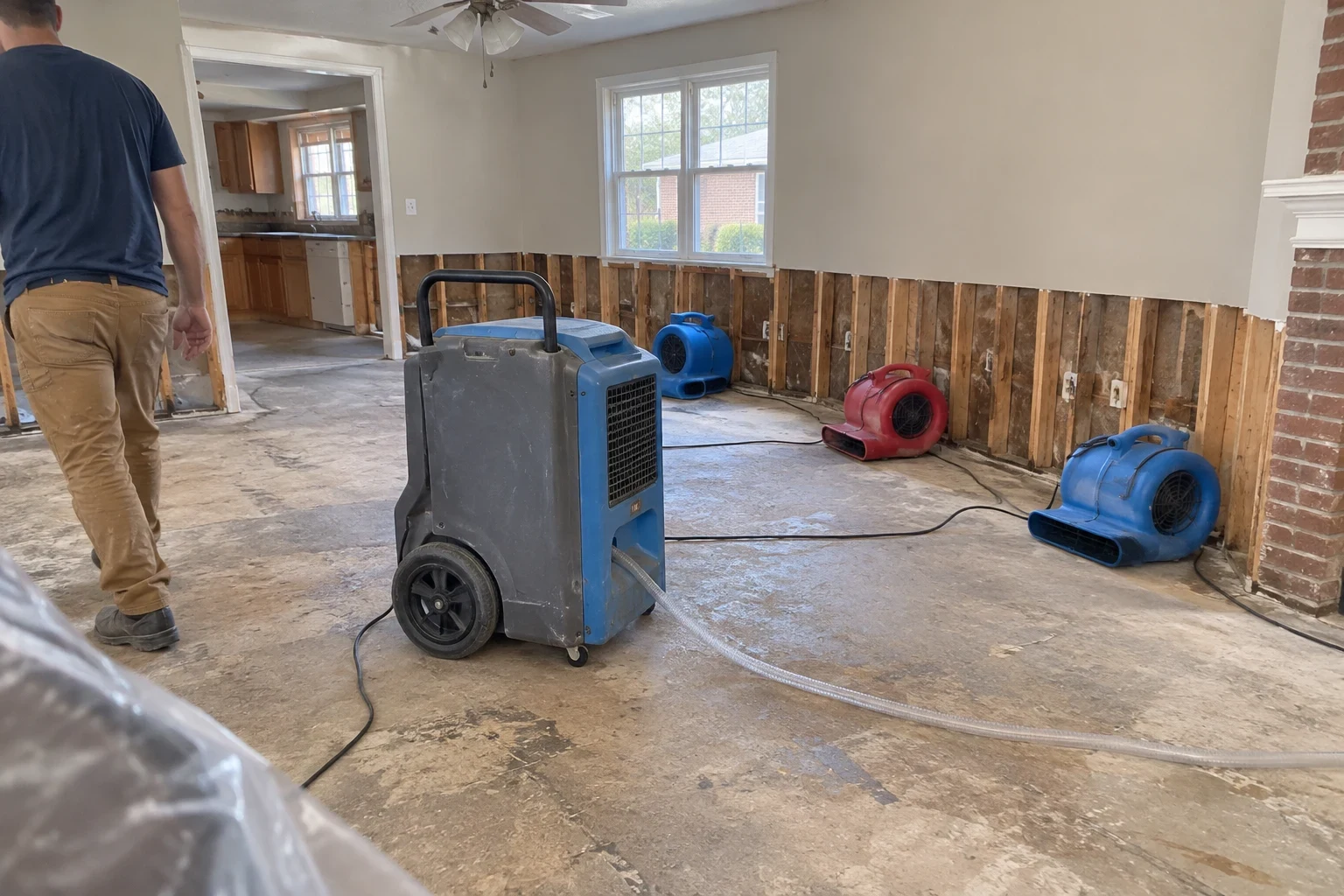
After the standing water is gone, moisture is still in your drywall, framing and subfloor. We find it with meters, pull it out with sized dehumidifiers and air movers, and log the readings every day so you and your insurer can see the progress.
Drying is the step that decides how much you rebuild
Water extraction takes care of what sits on the surface. The rest has already moved into gypsum drywall, climbed into the bottom plates of your walls and spread under vinyl plank into the subfloor. Drying and dehumidifying goes after that hidden water deliberately, using equipment sized to the room and readings that prove when each material has reached dry.
Speed matters because building materials break down in known ways. Gypsum loses strength as it softens, OSB subfloor swells along its edges, and hardwood strips take on water from underneath and cup. Mold can begin on damp organic materials within a day or two. During a muggy Virginia summer, open windows mostly trade indoor moisture for outdoor humidity, so we keep the space closed and controlled.
An adjuster looks for evidence on two points: that materials got wet, and that they were brought back to dry. On every visit we take readings at the same marked spots and photograph the equipment running. We work with most major insurance companies, so we know the records they tend to ask for and can walk you through the usual order of a claim. The decision on coverage still belongs to your adjuster.
The pieces of a drying job
- 01
Finding the edge of the wet area
Thermal imaging points us toward cool, damp zones, then pin and pinless meters confirm them. Every reading is checked against a dry baseline taken from unaffected material elsewhere in your home, so dry means a measured number.
- 02
Low-grain refrigerant dehumidifiers
An LGR unit takes indoor air to a humidity level a household dehumidifier never reaches. Air that dry pulls water out of studs and gypsum faster. Cool rooms or dense materials may call for a desiccant unit as well.
- 03
Air movers aimed at wet surfaces
We angle fans along the bottoms of walls and across the floor to keep air sweeping over damp materials. The moisture map decides where each one goes, not a tidy grid.
- 04
Getting air inside walls and floors
Baseboards often come off so we can drill small holes behind them and push dry air into the wall cavity. For hardwood, a floor mat system can draw moisture up through the boards.
- 05
Removing what will not dry
Soaked carpet pad, swollen particleboard and wet batt insulation trap water and seldom recover. Each piece is photographed before it comes out, so your claim file shows the reason.
Questions about Drying and Dehumidifying?
Call(804) 531-5396Signs your home still needs drying
A musty smell days later
If a room smells damp after the visible water is gone, moisture is likely trapped in the wall cavity or under the flooring.
Soft drywall or bubbling paint
Press the drywall near the baseboard. If it gives or the paint has blistered, the gypsum is still wet.
Cupped boards or lifting seams
Hardwood edges rising above the centers, or vinyl plank seams that gap or peak, mean water is sitting beneath the surface.
Fogged windows and sticky air
Condensation on the inside of the glass shows the indoor air is carrying more water than it should.
A ceiling stain that keeps growing
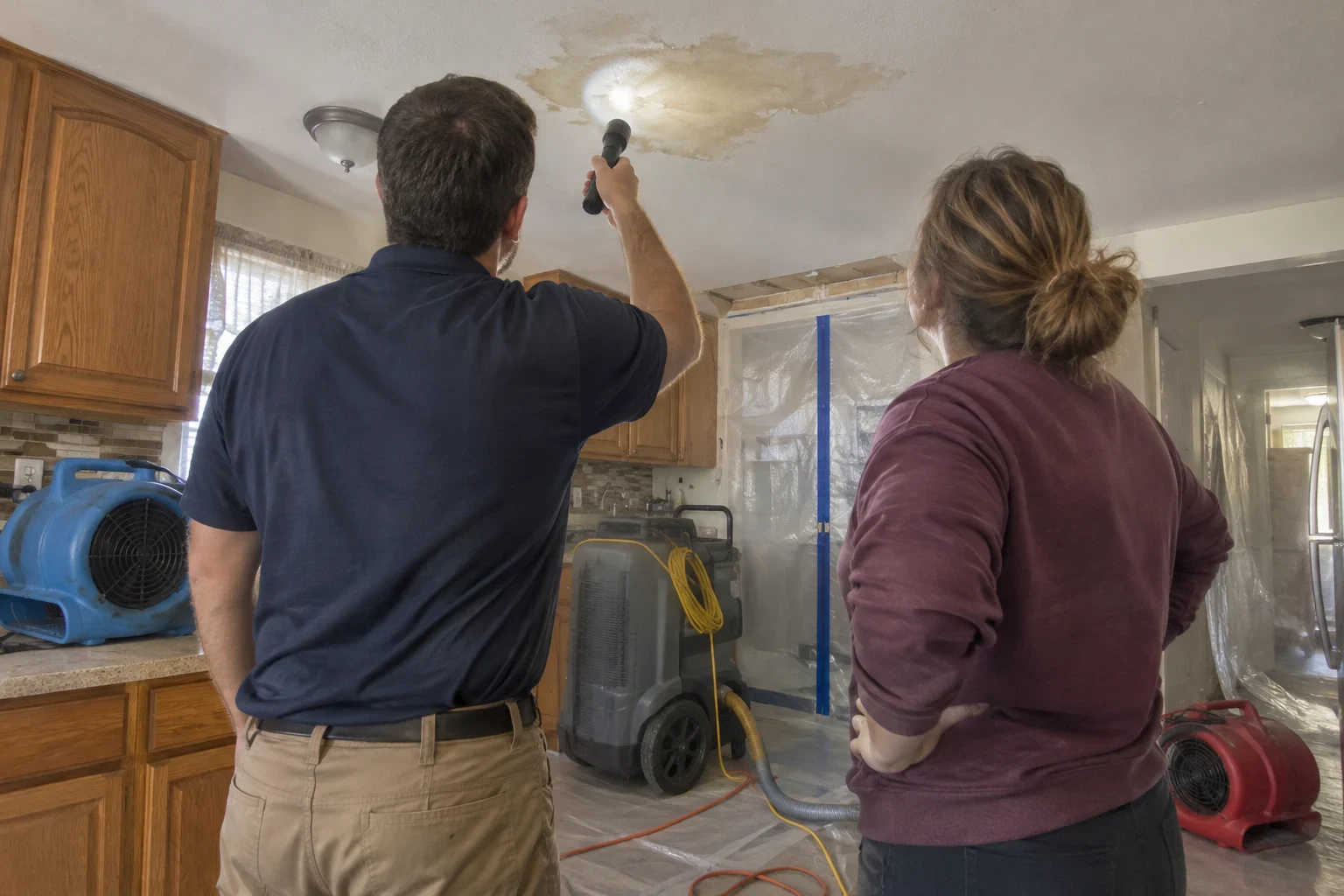
After an upstairs bathroom or supply line leak, a spreading stain means water is still moving through the ceiling and joists. Box fans won't reach it.
How a drying job runs
- 1
Inspection and moisture map
You call, we come out for a free on-site inspection, and our crews are on site in 60 mins or less. We meter every affected room, mark the reading points and photograph what we find.
- 2
Setting up the drying system
The number of dehumidifiers and air movers is calculated from room volume and how much water each material absorbed. We may hang plastic sheeting to close off the wet area so the equipment dries a smaller volume of air.
- 3
Daily checks and adjustments
We return to take readings at the same marked points, empty or check drain lines, and move equipment as areas dry. Each visit goes into your drying log.
- 4
Verified dry and handed off
When readings match the dry standard, the equipment comes out. You get the log and photos, and if materials were removed, our repairs and rebuild work can pick up from there.
What affects the cost of drying
Drying is mostly billed by the equipment needed and the days it runs, so the price follows how much water got where. We give you a written, line-item estimate after the inspection. Insurers often pay drying on that same equipment-per-day basis, which is why the daily readings matter.
- How far the water spread
- One wet room with a few inches of drywall wicking needs far less equipment than water that ran under walls into three rooms and a hallway.
- The materials involved
- Drywall and carpet dry relatively fast. Hardwood, plaster and concrete slabs hold water deeper and take more days.
- Access to hidden moisture
- Crawlspaces, cabinet toe kicks and finished basement walls may need panels opened or holes drilled before air can reach the wet framing.
- The category of water
- Clean supply line water is dried in place more often. Water from a toilet overflow or backup carries contamination, so porous materials come out and sewage cleanup comes first.
Drying and dehumidifying questions
How long does drying usually take?
Many clean water losses dry in three to five days. Hardwood floors, plaster walls or a wet slab can take longer. We don't pull equipment on a schedule; it comes out when the readings say the materials are dry.
Can I dry it myself with fans and my own dehumidifier?
Fans can dry surfaces, but a household dehumidifier can't pull the air low enough to draw water out of framing and subfloor. The result is often drywall that feels dry while the bottom plate stays wet. That hidden moisture is where mold and odor start.
Can we stay in the house while the equipment runs?
Usually, yes. The units run around the clock and make steady noise, and they draw real power, so we plan which circuits each one uses. We'll show you where cords and sheeting are so the house stays passable.
Will my insurance pay for drying?
That depends on your policy and the cause of the water. Sudden, accidental leaks are often covered, while slow seepage over months often is not. We document readings and photos for your claim, but your adjuster decides what is covered.
Do you have to cut open my walls?
Not always. Often we remove baseboards and drill small holes that the trim later covers. We cut drywall only when insulation is soaked or the water was contaminated, and we photograph it first.
Get the moisture out before it settles in
The sooner dry air reaches your walls and floors, the more of them can stay in place. Tell us what happened and we'll come out, meter the damage and lay out a drying plan.