ServicesMold Remediation
Mold Remediation in Ettrick
Mold returns when the water feeding it is left alone. We find that source, contain the affected rooms, remove contaminated drywall and insulation, and clean the framing behind them. You get photos and moisture readings along the way, so your insurer sees exactly what we found.
What mold remediation actually fixes
Mold needs moisture, a food source and time. Drywall paper, carpet pad, wood framing and the dust inside wall cavities all count as food, and in a damp spot growth can start within a day or two. Spraying bleach on a visible patch kills surface growth but leaves the root-like hyphae inside porous material and does nothing about the leak, so the stain comes back.
Remediation means stopping the moisture, isolating the area so spores don't spread through your HVAC, removing materials that can't be cleaned, and cleaning what can be saved. Humid summers around Ettrick keep crawl spaces and basements damp for months, which is why we check the space under or behind the growth, not just the wall you can see.
Insurance is often the first worry. Many policies cover mold only when it came from a sudden, accidental water event, and may limit or exclude growth from a slow leak. We can't decide coverage, but we write down the cause we find and when it likely started, which is the information your adjuster will ask for.
What the work includes
Moisture source tracing
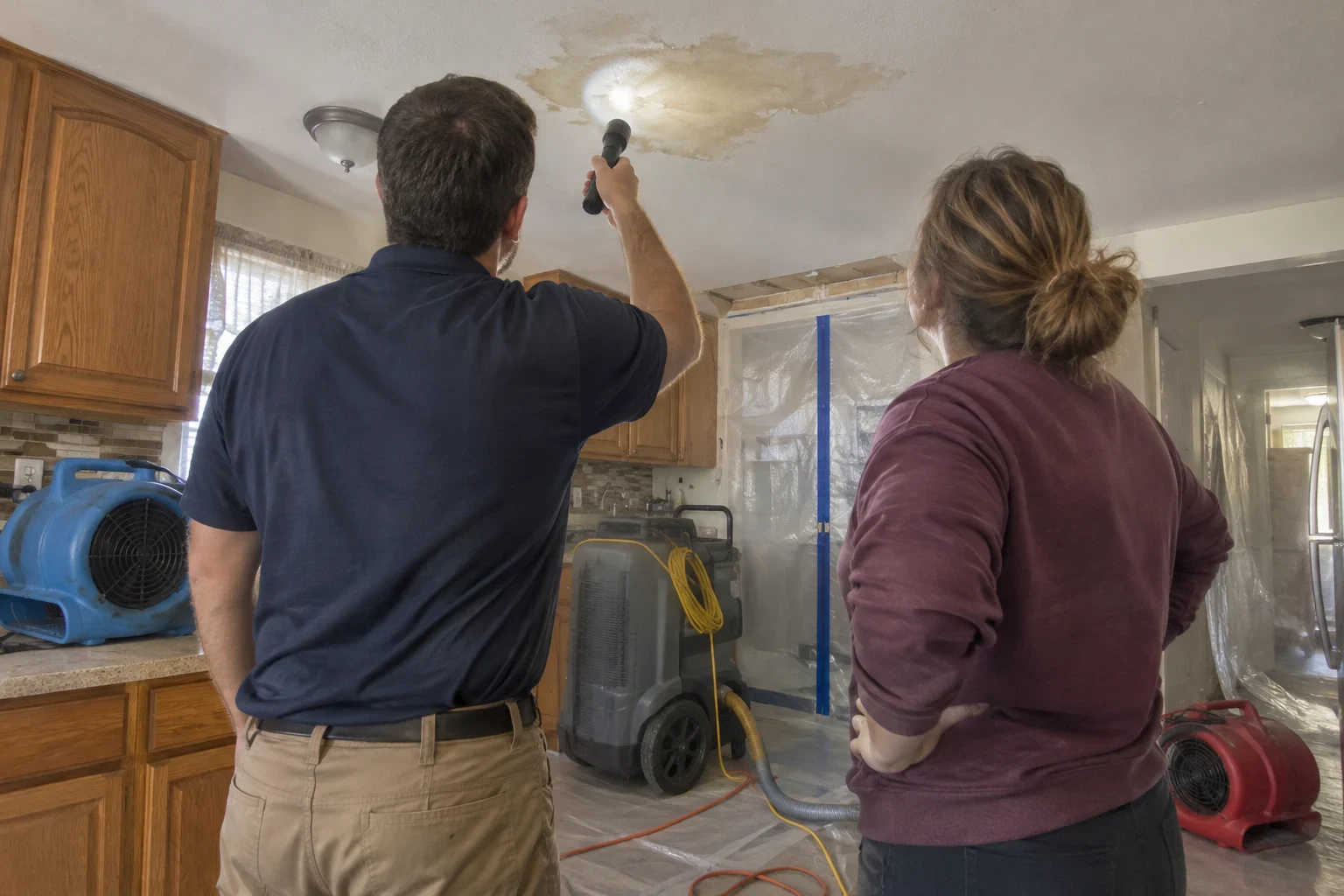
We use moisture meters and thermal imaging to follow the water to its origin, whether that's a supply line, a failed window flashing or condensation on uninsulated ductwork. If the source needs a plumber or roofer, we tell you plainly.
Sealed work zone under negative pressure
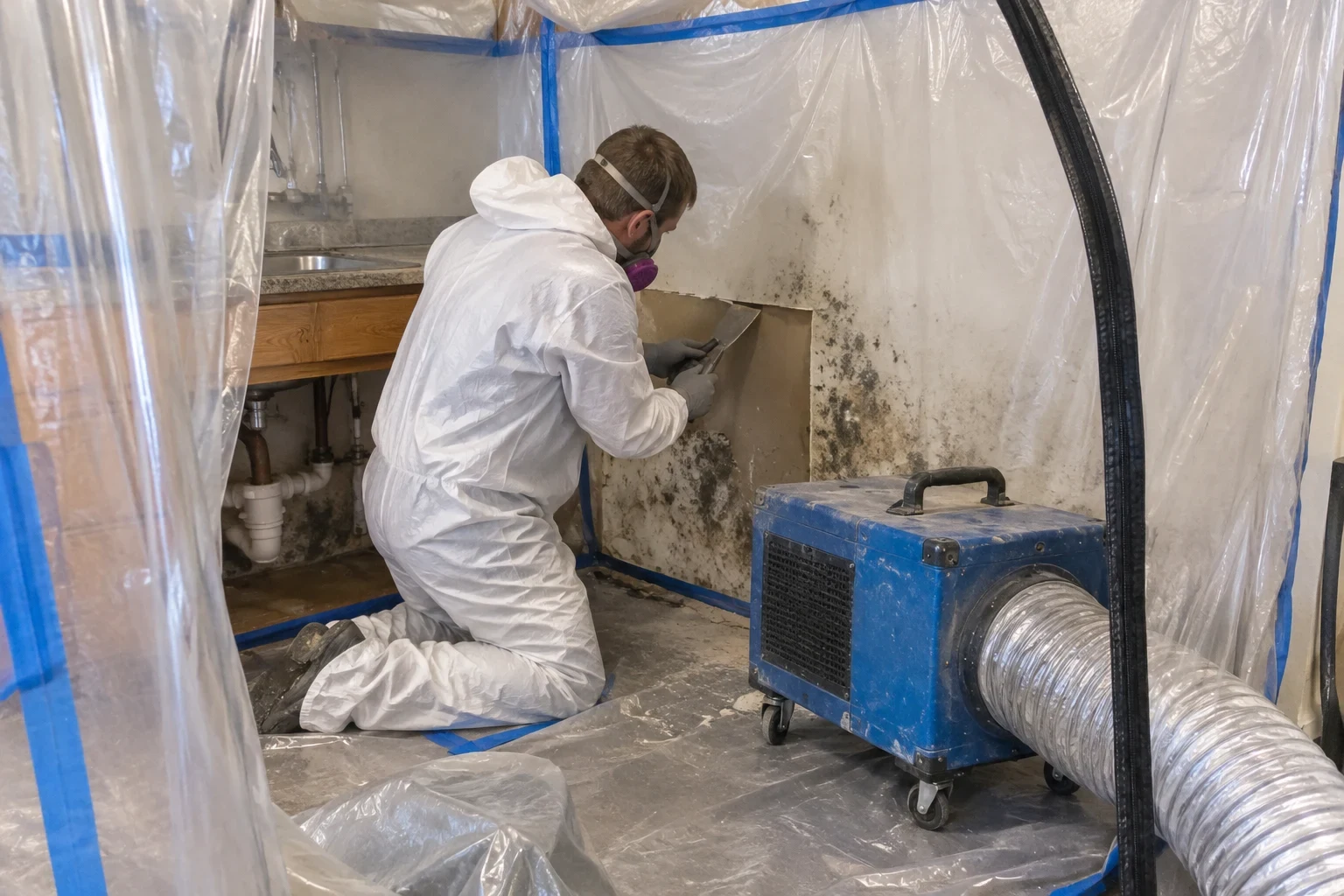
Before any material is disturbed, polyethylene sheeting and a zippered entry go up around the affected rooms. HEPA air scrubbers vent to the outdoors, so air is pulled into the zone instead of pushed out of it, and loosened spores stay put rather than drifting toward clean rooms.
Removal of porous materials
Moldy drywall, insulation and carpet pad come out in sections and go straight into heavy plastic bags while we're still inside the sealed area, so nothing travels through your home uncovered. We cut drywall back past the last wet reading, not just past the visible stain.
Cleaning of structural wood
Studs, joists and subfloor are usually saved. We HEPA-vacuum, scrub or sand the surface growth, then apply an antimicrobial before anything is closed back up.
Claim documentation
You receive dated photos, moisture readings and a line-item scope of what was removed and why. We work with most major insurance companies, and we explain each document so you know what you're handing your adjuster.
Signs it's time to call about mold
- A musty smell that won't clear
- An earthy odor in a closet, basement or crawl space usually means active growth somewhere, even when nothing is visible yet.
- Spotting or staining on drywall
- Gray, green or black flecks, or a yellow-brown ring that keeps spreading, point to moisture behind the paint.
- Water damage left wet too long
- If a leak or overflow sat for more than a day or two before drying, check the material behind baseboards and under flooring. Prompt drying and dehumidifying is the best way to prevent mold in the first place.
- Soft or warped materials
- Swollen baseboard, bubbling paint and cupped hardwood show the material has held water, and those are the conditions mold needs.
- Condensation on ducts or windows
- Sweating ductwork in a crawl space or constant fog on window glass feeds growth on nearby wood and insulation.
How a remediation job runs
- 1
Free on-site inspection
We measure moisture, map the affected area and photograph it. You get our honest read on whether this needs full remediation or a smaller cleanup.
- 2
Written scope and claim notes
We list each material to be removed, the square footage and the containment needed. If you're filing a claim, this document and the photos go to your adjuster.
- 3
Containment and removal
We set up plastic sheeting and HEPA air scrubbers, protect flooring along our path, then remove and bag contaminated material inside the sealed area.
- 4
Cleaning, drying and checks
Framing is cleaned and treated, then dried until meter readings reach normal levels. We take final readings and photos before the containment comes down.
- 5
Ready to rebuild
Once the area is clean and dry, our repairs and rebuild crew can replace drywall, insulation and trim so you aren't left with open walls.
What drives the cost of mold remediation
Price follows the amount of material that has to come out and the effort needed to keep spores contained. We give you a written estimate after the inspection, broken into line items, so you can compare it to what your policy covers.
- Size of the affected area
- A few square feet behind a sink is a different job from a whole basement wall. Square footage of removal drives labor and disposal.
- Materials involved
- Drywall and fiberglass insulation are quick to remove. Plaster, hardwood flooring or finished cabinetry take more time to open up and replace.
- Access
- Low crawl spaces, attics and wall cavities behind built-ins slow the work and may require extra containment.
- Hidden spread
- Growth found once walls are open can expand the scope. If that happens, we stop, photograph it and update the estimate before continuing.
Mold remediation questions
- Will my homeowners insurance pay for mold removal?
- It depends on the cause and your policy. Mold from a sudden event like a burst pipe is often covered, sometimes up to a set limit, while mold from long-term leaks or humidity is often excluded. We document the source and timeline we find, and your adjuster makes the coverage decision.
- Can I just clean it with bleach?
- A small patch on tile or another hard surface that doesn't absorb water is a reasonable do-it-yourself job. Drywall paper and wood are porous, so bleach tends to fade the color while the water it carries soaks deeper into the material. Until the moisture source is fixed, the growth comes back no matter what you clean with.
- Do I need to leave my home during remediation?
- Usually not. Containment and negative air pressure keep the work area separate from the rest of your home. For large jobs or anyone with respiratory concerns, we'll talk through whether staying elsewhere makes sense.
- What happens if water is still leaking where the mold is?
- That leak gets handled before any mold work starts, because removing growth while the wall is still getting wet only sets up a second round. Our emergency water damage response stops and extracts the water first. Our offer is on site in 60 mins or less, so the source can be dealt with quickly and remediation can follow once the area is drying.
- How long does remediation take?
- A small contained area can be finished in a day or two. Larger jobs with wet framing take longer because the wood must dry to normal readings before rebuild.
Find out what's behind the wall
We'll trace the moisture, measure the affected area and show you photos of what we find. You'll have a written scope to review and to share with your insurer if you file a claim.