ServicesFlood Cleanup
Flood Cleanup in Ettrick, VA
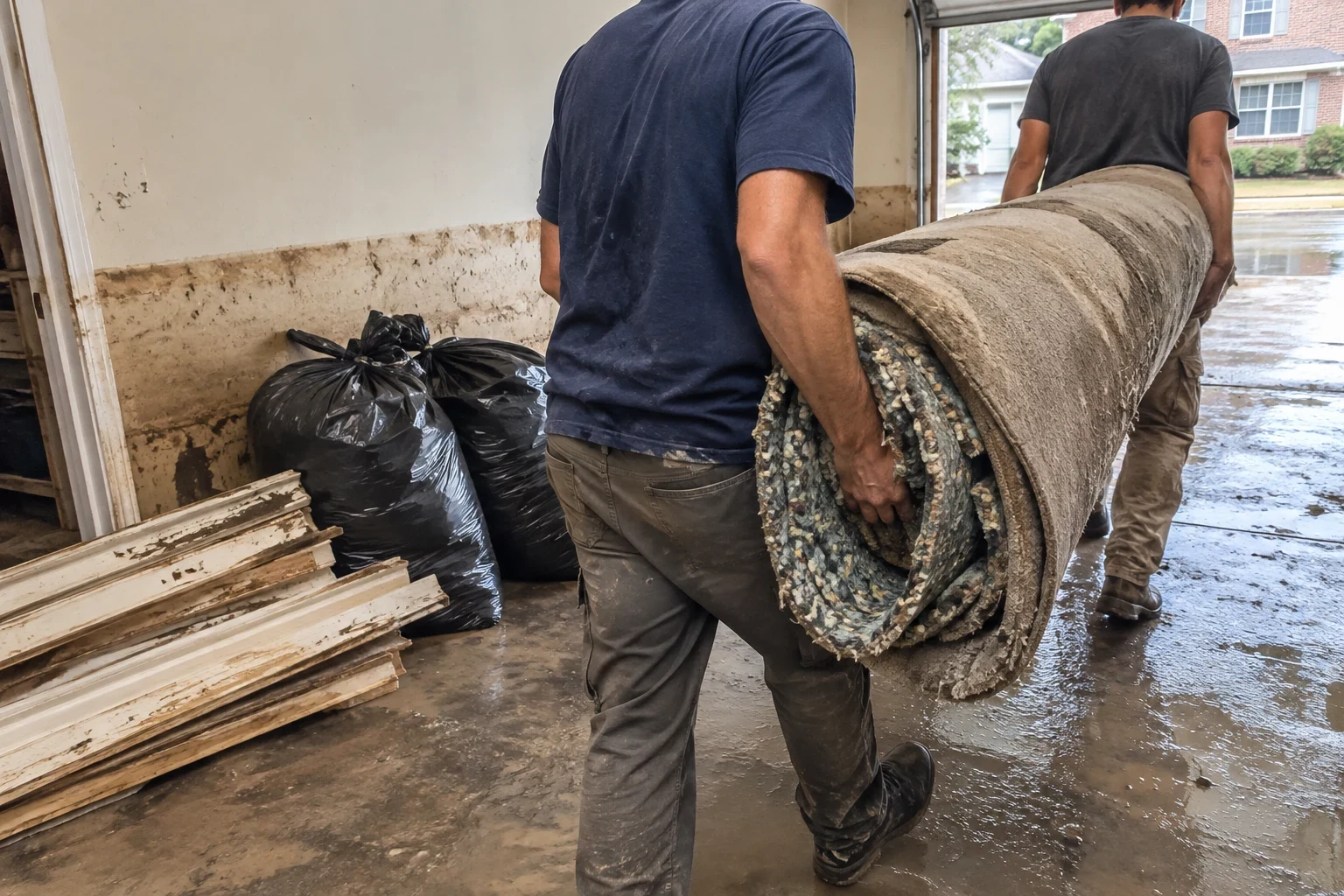
Floodwater that reaches your home carries soil, bacteria and fuel residue into floors and walls. We clear the standing water and silt, remove the materials that soaked it up, sanitize the framing that stays and photograph each stage so your claim has a clear record from day one.
Why floodwater needs more than a wet vac
Water that enters from outside, through a door threshold, a basement window well or up through a crawl space, is treated as Category 3 water under industry standards. That means it is assumed to carry sewage, lawn chemicals and bacteria. Porous materials it touches, like carpet pad, fiberglass insulation and the paper face of drywall, absorb those contaminants and usually have to be removed rather than dried in place.
Flood cleanup is the stage between the water leaving and the drying starting. We remove standing water and silt, tear out contaminated materials to a clean line, and apply an antimicrobial to the framing and subfloor. Then the structure is ready for drying and dehumidifying.
We also help you understand the insurance side. Standard homeowners policies often exclude surface flooding, while a separate flood policy may cover it. We don't decide coverage, but we give you the photos, moisture readings and itemized lists an adjuster asks for. We work with most major insurance companies.
What our flood cleanup covers
- Water and silt removal
- Truck-mounted or portable pumps clear standing water, then we shovel and squeegee out the mud layer. Silt left on a slab or subfloor holds moisture and bacteria long after the water is gone.
- Flood cuts on drywall
- Drywall wicks water upward, so we cut it out in a straight line, typically 12 to 24 inches above the visible waterline. That exposes wet insulation and lets the wall cavity dry from inside.
- Removal of carpet, pad and trim
- Carpet pad soaked in floodwater can't be sanitized and goes out. Baseboards, door casings and particleboard cabinet bases usually swell and come out too. We note each item for your claim.
- Crawl space and insulation cleanout
- Many homes in the area sit over crawl spaces. We pull wet batts and torn vapor barrier, remove debris and get the space ready for drying.
- Cleaning and antimicrobial treatment
- Studs, joists, sill plates and the slab or subfloor are cleaned and treated with an EPA-registered antimicrobial before any drying equipment goes in.
- Claim documentation
- Date-stamped photos before, during and after tear-out, moisture readings by room, and an itemized list of discarded materials and contents.
Signs your home needs flood cleanup
A visible waterline on walls
A brown line on drywall or paneling shows how high the water reached. Everything below it, and some distance above it, has been wet.
Mud or grit on the floor
Silt means the water came from outside. That puts it in the contaminated category even if it looked clear.
Water in the crawl space or basement after a storm
Heavy summer thunderstorms and tropical storm remnants can push groundwater in quickly. Pooled water under the house soaks joists and insulation you can't see.
A sour or sewage smell
Odor points to bacteria growing in pad, insulation or wall cavities. It tends to get worse within a day or two.
Soft or buckled flooring
Cupped hardwood, lifting vinyl seams or a spongy subfloor mean water got below the surface layer.
From first walk-through to dry framing
- 1
Hazard check and free inspection
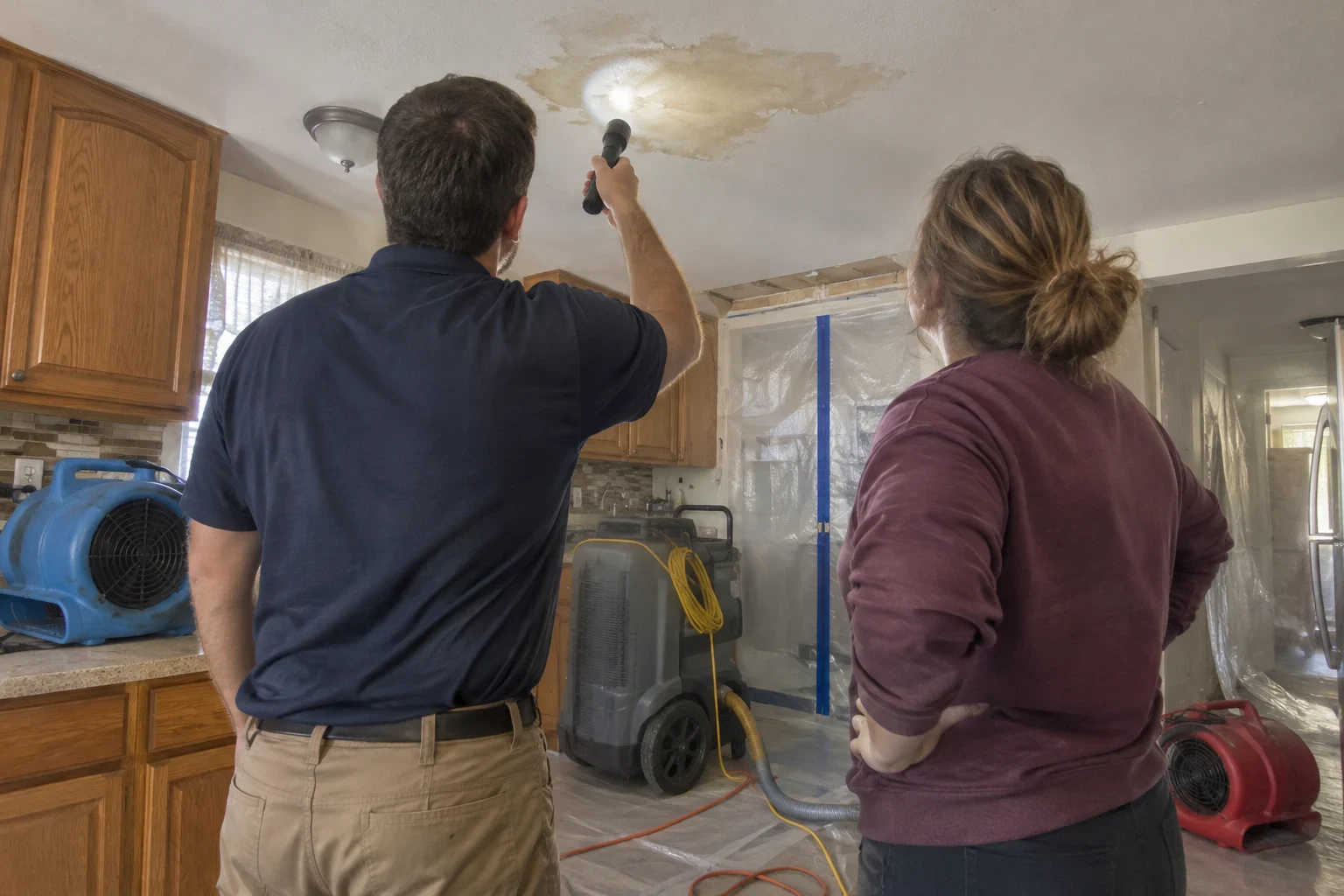
Before anyone steps into wet rooms, we make sure the circuits feeding them are shut off and look for sagging ceilings or damaged floors. Moisture meters and a thermal camera then show how far the water actually spread. There is no charge for this inspection.
- 2
Photos before anything moves
Every room, the waterline and the damaged contents get photographed so your adjuster sees the loss as it was. Copies are yours to keep.
- 3
Extraction and tear-out
Standing water and silt go first. After that come the flood cuts, the pad and trim, and bagged debris, with each removed item logged by room.
- 4
Clean, treat and dry
Exposed framing and floors are scrubbed and treated with antimicrobial. Air movers and dehumidifiers are set, and we take readings until the materials hit dry targets.
- 5
Hand-off to rebuild
When the readings confirm a dry structure, our repairs and rebuild crew can put back drywall, insulation and flooring.
What affects the cost of flood cleanup
The price comes down mainly to how much material has to be removed and how many days the structure needs to dry. Once we finish the inspection, you get an itemized estimate in writing, with each charge broken out so you and your adjuster can review the same numbers.
- Water depth and affected area
- An inch across one room is a different job than a foot through a whole basement. Depth sets how high the flood cuts go and how much drywall and insulation leave the house.
- Materials involved
- Carpet and pad, drywall and fiberglass batts come out. Tile, concrete and solid wood framing can often be cleaned in place, which lowers cost.
- Access
- Tight crawl spaces and finished basements with built-ins take more labor than an open slab.
- Time before cleanup starts
- Every day floodwater sits, it wicks higher into walls and gives mold a head start. Waiting usually means more removal and possibly mold remediation on top of the cleanup.
Flood cleanup questions
Something not covered here? (804) 531-5396
Will my homeowners insurance pay for flood cleanup?
That depends on where the water came from and which policy you carry. Many standard homeowners policies exclude surface flooding, while a separate flood policy may cover it. We can explain the difference and supply documentation, but your adjuster makes the coverage decision. Contact your insurer early and keep your claim number handy.
Can I clean up flood damage myself?
With a small amount of clean water, maybe. Floodwater from outside is considered contaminated, and soaked pad, insulation and drywall can't be safely sanitized. Without proper tear-out and drying, mold often appears inside wall cavities weeks later.
Should I throw out damaged items before you arrive?
Keep them if you safely can. Adjusters often want to see damaged belongings, or at least a photo and a description. If something has to go, photograph it first and write down what it was and roughly when you bought it.
Do I have to leave my home during flood cleanup?
Not always. If the damage is limited to a basement or crawl space and the power is safe, many families stay put. If main living areas are affected or sewage is involved, we'll tell you plainly whether staying makes sense.
Do you respond after hours?
Yes. Emergency water damage response is available 24/7, and we're on site in 60 mins or less once you reach us. Getting standing water out fast limits how far it wicks up into drywall and framing.
Get the water out and the record started
We'll inspect the damage, explain what has to come out and why, and begin the photo record your claim will rely on.